
Why this topic fits August
LED CHINA is coming in September. Many LED factories are already checking machine plans. Flip chip LED is a useful topic for these buyers.
It is not a broad beginner term. It has a more serious search intent. The reader may be checking yield, output, package size, or line cost.
That makes the topic good for etonsmt.net. It links a technical LED term with a buying question. It also gives the sales team an easy CTA.
What makes flip chip LED different
A flip chip LED has its contacts facing down. This can help heat flow and save space. It can also support brighter and smaller LED products.
But the process needs care. Parts are small. Pads are tight. So the line needs stable printing, accurate placement, clean handling, and good inspection.
For this reason, buyers should not choose a line by speed alone. They should also check stability. A slower but steadier setup can protect yield.
SMT placement requirements
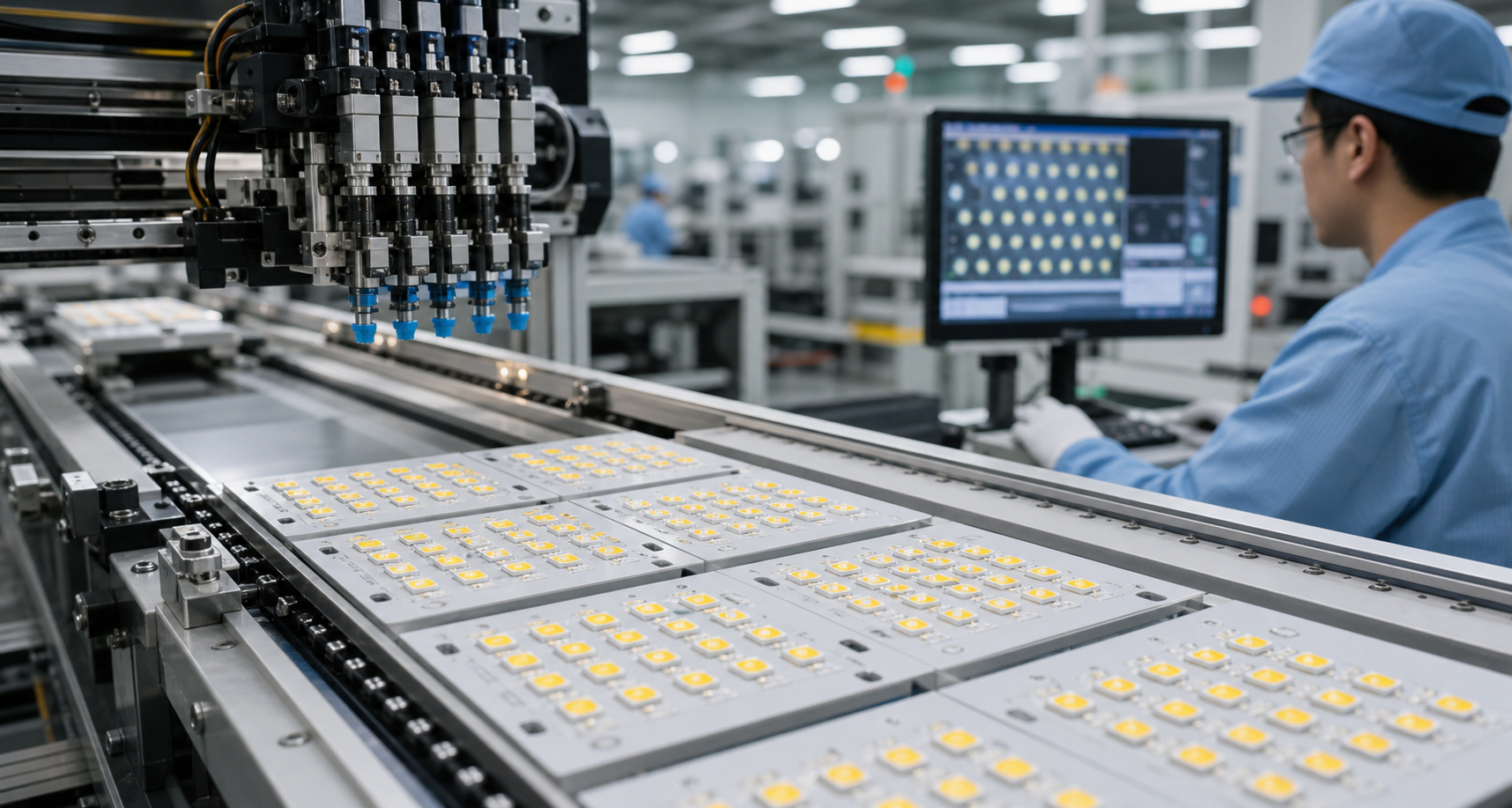
For normal LED boards, speed is often the first concern. For flip chip LED, accuracy is just as important. The machine must hold repeat accuracy during long runs.
Buyers should check nozzle choice, feeder type, camera control, and real placement speed. Also, ask the supplier to review the exact LED package before quoting.
A simple LED process flow
A basic line starts with solder paste printing. Next comes SMT placement. Then the board goes through reflow. After that, AOI and electrical tests help catch defects.
This full LED production scenario matters. A lamp manufacturing machine is only one part of the line. You may also need conveyors, test fixtures, and depaneling tools.